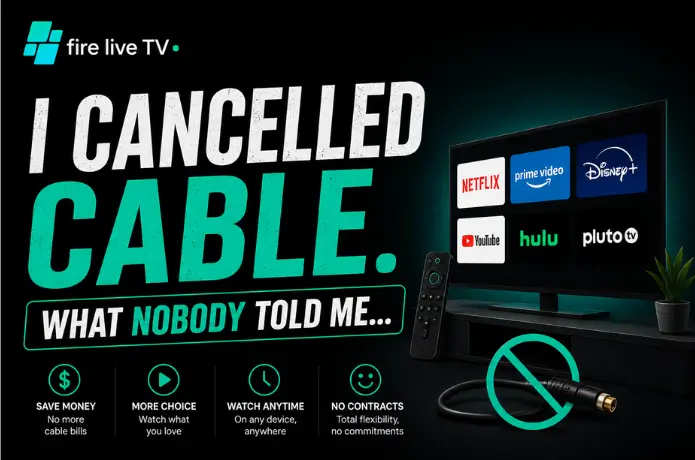

I put off cancelling cable for almost two years. Not because I loved it — nobody loves paying $140 a month for 200 channels they never watch — but because the idea of "figuring out streaming" felt like a project I didn't have time for. Turns out, I was overthinking it. Big time.
Quick answer: I cancelled cable in March 2026, switched to a mix of streaming apps and an IPTV service, and ended up paying about a third of what I used to pay — while actually watching more of what I want. The switch took less than an hour. The only real adjustment was figuring out which app to open for what.
If you're sitting where I was a few months ago, here's the honest, no-fluff version of what happened.
Why I Finally Cancelled Cable
The breaking point wasn't even the price increase (though that didn't help). It was opening my bill one morning and seeing a $9.99 "broadcast TV fee" — a charge for channels that are free over the air — sitting right next to a $7.50 "regional sports fee" for a sports package I never used.
That's when I started looking seriously at cable alternatives that USA providers actually offer. I wasn't trying to become a tech person overnight. I just wanted live TV, my local channels, and sports — without the fee circus.
The Cable Alternatives I Tried First
I'll be honest — my first attempt wasn't great. I tried stacking three separate streaming apps (one for live local channels, one for sports, one for everything else), and within a week, I had three different logins, three different remotes basically, and somehow I was paying almost as much as cable again once you added it all up.
That's when a friend mentioned IPTV services — basically one app, one login, thousands of channels, including local and international, sports, and on-demand content. I was skeptical. It sounded like one of those "too good to be true" things you see in a random YouTube ad.
So I did what I always do before spending money: I tested it for free first.
What Switching to IPTV Actually Looked Like
Setup took less time than I expected — about 15 minutes on my Fire TV Stick, plus another 10 on my phone so I could watch in the kitchen while cooking (something cable never lets me do without paying for an extra box).
A few things stood out right away:
- My local news and network channels were all there — the exact thing I was worried about losing.
- Sports channels actually loaded fast, no weird 10-second buffering before kickoff.
- I could pause and rewind live TV, which my old cable box technically did too, but it always lagged.
The app I ended up sticking with was IPTV Smarters Pro — simple, clean, and it didn't try to overwhelm me with settings I'd never touch.
The Surprising Part Nobody Warns You About
Here's what genuinely surprised me — and it's not what you'd expect.
I assumed the hard part would be the technical setup. It wasn't. The hard part was habit. For the first week, I kept reaching for the cable remote out of muscle memory. Old habits are weirdly stubborn.
The second surprise: international channels. I have family overseas, and cable charged an extra $25/month for a "world channels" add-on that included maybe 15 channels in total. With IPTV, I had access to hundreds of international channels included in the base plan — channels I didn't even know I'd want until I started flipping through them.
The third thing — and this one's less fun — is that not all IPTV services are created equal. Some of the free or super-cheap options I tried were constantly buffered during live sports, which honestly defeated the whole purpose. Stability mattered more than I expected.
My Monthly Live TV Plan Now vs Before
Here's the side-by-side that actually convinced me to stop going back and forth:
Before (Cable):
- Base package: $89.99
- Broadcast TV fee: $9.99
- Regional sports fee: $7.50
- Equipment rental (2 boxes): $19.98
- Taxes/misc fees: ~$12
- Total: ~$139.46/month
After (IPTV):
- Monthly live TV plan: $29.99 (covers 6000+ channels, multiple devices)
- Equipment: $0 (used devices I already owned)
- Total: $29.99/month
That's roughly $109 saved every single month — over $1,300 a year. For the same (honestly, more) content.
Was It Worth It? My Honest Verdict
Yes — but with one caveat. If you go this route, don't pick the cheapest, sketchiest-looking service just to save a few extra dollars. The one or two bad experiences I had early on were both with services that looked legit on the surface but couldn't handle live sports without constant buffering.
Once I switched to a more reliable provider, the experience genuinely felt better than cable — more channels, more flexibility, lower cost, and no surprise fees.
If you're on the fence, my advice is simple: try a free trial first, test it during a live sporting event (that's where weak services fall apart), and go from there.
👉 Curious if it'll work for your setup? Try a free 24-hour trial with FireLiveTV and see for yourself before committing to anything.
Frequently Asked Questions
Is it actually worth cancelling cable in 2026?
For most people, yes — especially if your cable bill includes broadcast fees, regional sports fees, and equipment rentals, which can easily add up to $50+ on top of the base price. IPTV and streaming alternatives typically cost a fraction of that for similar or better content.
What happens to my local channels if I cancel cable?
Most IPTV services include local network channels (ABC, NBC, CBS, FOX, etc.) as part of their standard packages, so you don't lose access — you may just access them through an app instead of a cable box.
Do you miss cable after switching?
Honestly, the only thing I missed was the muscle memory of using a single remote. Content-wise, I have access to more channels now than I did before, including international options I didn't have at all on cable.
How much does IPTV cost compared to cable?
On average, IPTV plans run between $20–$35/month, depending on the provider and package, compared to $100–$150+/month for cable once fees and equipment rentals are included.
Is switching to IPTV complicated?
Not really — most setups take 15–20 minutes on devices like a Fire TV Stick or Smart TV, and many services offer free trials so you can test everything before committing.